© ×
A Midsummer Night's Dream
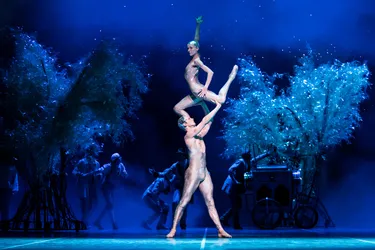
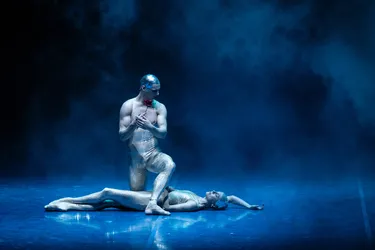
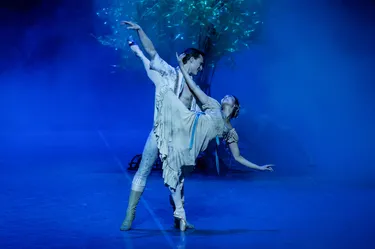
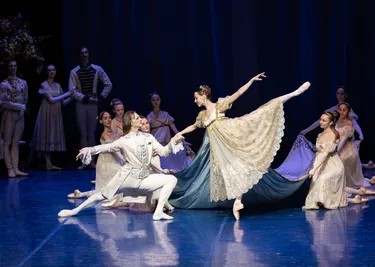
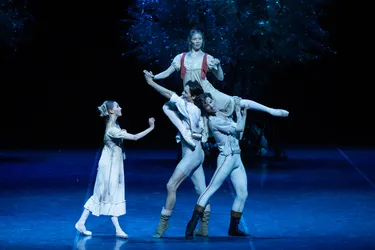
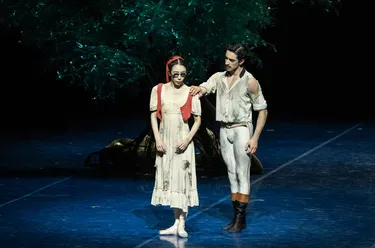
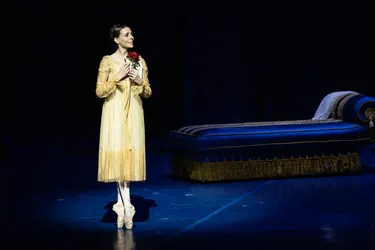
In the unusual and magical atmosphere of the Kuppel Hamburg, John Neumeier's A Midsummer Night's Dream takes us right into the heart of this mystical night of transformations.
Credits
World Premiere: Hamburg Ballet, Hamburg, July 10, 1977
Adapted New Version for Kuppel Hamburg, June 19, 2027
Cast
-
Choreography
-
MusicFelix Mendelssohn BartholdyGyörgy LigetiTraditionelle mechanische Musik
-
Staging and Light Design
-
Set and CostumesJürgen Rose
-

© ×
Bildrechte über Hamburgische Staatsoper -
© ×
Kiran West -
© ×
Kiran West -
© ×
Kiran West -
© ×
Kiran West -
© ×
Kiran West -
© ×
Kiran West -
© ×
Kiran West -
© ×
Kiran West -
© ×
Kiran West -
© ×
Bildrechte über Hamburgische Staatsoper

The Production
- Venue Kuppel Hamburg
-
Duration
150 m
-
Intermission
2 hours 30 minutes | 1 intermission
Part 1: 75 minutes, Part 2: 50 minutes - Age recommendation from 10 years on
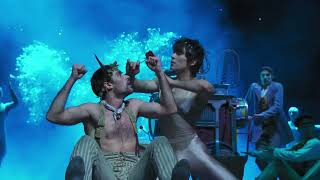
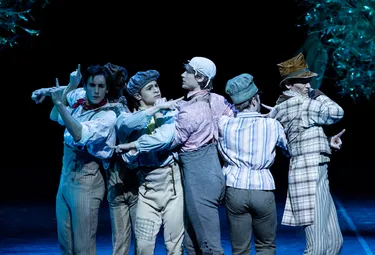
the elegant world of the aristocrats at the court of Theseus in Athens, the comical world of the craftsmen, and the mysterious dream world in the fairy forest, where human conflicts are magnified and find at times surprising and vehement expression. At the center of the story is what Neumeier himself calls the “mystery of human love” – with all its touching, erotic, and highly comical facets.
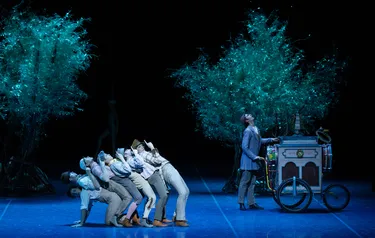
The music ranges from Mendelssohn's romantic melodies to Ligeti's atmospheric soundscapes and traditional barrel organ music. The imaginative costumes and sparse stage design by Jürgen Rose complete the unique atmosphere of these special summer nights.


Historic Data − +
ORIGINAL CAST:
Hippolyta/Titania: Zhandra Rodriguez
Theseus/Oberon: François Klaus
Philostrat/Puck: Kevin Haigen
Hermia: Magali Messac
Helena: Marianne Kruuse
Lysander: Ivan Liska
Demetrius: Tanju Tüzer
Bottom/Pyramus: Max Midinet
Flute/Thisbe: Richard Gibbs
ON TOUR:
1978 Stuttgart, Frankfurt-Hoechst, Munich, Leverkusen 1979 Warsaw, Paris, Cologne 1980 Luxemburg, Mannheim, Bucarest, Lausanne, Bregenz, Wiesbaden, Brussels 1981 São Paulo, Rio de Janeiro, Buenos Aires, St. Petersburg 1983 New York, Venice, Dortmund 1984 Toronto, Ottawa, Chicago (Ravinia Festival) 1986 Tokyo, Sendai, Yokohama, Nagoya, Osaka, Kita-Kyushu 1990 Ludwigshafen, Stuttgart, Taormina, Schwerin 1991 Belfast 1993 Frankfurt-Hoechst 1997 Hannover 1999 Hong Kong, Shanghai, Beijing 2000 Prague, Baden-Baden 2011 Gütersloh 2012 Baden-Baden, Brisbaine 2014 San Francisco 2015 Salzburg 2021 Baden-Baden 2023 Granada 2024 Nervi/Genoa 2025 Beijing
IN THE REPERTORY:
Ballet de l'Opéra National de Paris
Bolschoi Ballet
Dresden Semperoper Ballett
Houston Ballet
Polish National Ballet
Royal Danish Ballet
Royal Swedish Ballet
Vienna State Ballet
Synopsis − +
PROLOGUE
Hippolyta's Room
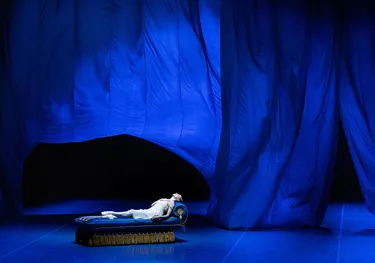
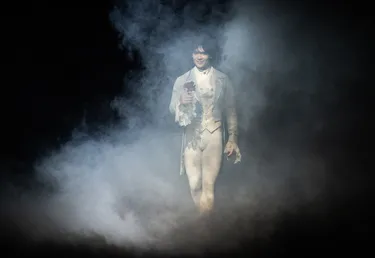
It is the evening before the wedding of Hippolyta and Theseus, Duke of Athens. Last minute preparations are being made, supervised by Philostrat, Master of the Revels at Theseus' court. Hippolyta's friends, Helena and Hermia, are helping put finishing touches to her bridal gown. The Court Treasurer presents the bridal jewels to Hippolyta. He is accompanied by the officer, Demetrius, Helena's former fiancé, who is now intent on winning Hermia's attentions – unsuccessfully. Helena still loves Demetrius. The gardener Lysander arrives bringing Hippolyta's wedding flowers. He loves Hermia, and his love is returned. He secretly gives her a letter asking her to meet him in the wood under an olive tree. Helena finds the letter and shows it to Demetrius. A group of rustics, lead by the weaver Bottom present Hippolyta with their text for a play "Pyramus and Thisbe" which they wish to perform for the marriage festivities. Theseus arrives to visit Hippolyta. Although he brings her a rose, Hippolyta is aware of his flirting with the ladies of the court. Left alone, Hippolyta finds and reads Lysander's love letter to Hermia. Pensive, she falls asleep with Theseus’ rose in her hand. She dreams...
ACT I
Night - In the Wood
The Realm of the Fairies
Titania, Queen of the Fairies, argues with Oberon, King of the Elves. In his anger Oberon gives Puck, a flower which has magical powers. If shaken over the eyes of someone asleep, that person will fall in love with the first person seen when he awakens. Oberon's orders Puck to use the love-flower on Titania. Lysander and Hermia meet in the wood. Demetrius looks for Hermia, followed by Helena. All are observed by Oberon.
Taking pity on Helena, Oberon orders Puck to use the love-flower on Demetrius, so that he will love return her love.
Lysander and Hermia are lost in the wood, and lie down to sleep. Mistaking him for Demetrius, Puck shakes the love-flower over Lysander. Helena accidentally awakens Lysander and he at once falls passionately in love with her. Confused by his attentions, she flees from him. Hermia awakens and searches for Lysander.
Bottom and his companions are looking for a spot in the woods to rehearse their play. The place found, roles are distributed, and Bottom leads the rehearsal. They are observed by Puck who transforms Bottom's head into that of an ass. Freightened at his appearance, the other rustics run away.
Titania and her followers fall asleep and Puck now uses the love-flower on her. She is accidentally awakened by Bottom, and is suddenly consumed with desire for him. Observing Demetrius, whose affections are still directed towards Hermia, Oberon realizes that Puck has made a mistake. He orders Puck to use the flower on the sleeping Demetrius. Helena, pursued by Lysander, stumbles over and awakens Demetrius. He also falls madly in love with her.
Confusion reigns. Oberon commands Puck to bring all the relationship in order. The elf arranges the sleeping lovers in their proper combinations and once again uses the love-flower on them all
ACT II
Dawn in the Woods
The lovers awaken and are united – Hermia with Lysander – Helena with Demetrius.
The rustics find Bottom.
Hippolyta's Room
After quietly observing the sleeping Hippolyta – dreaming upon her couch – Theseus gently awakens her. A love develops between them. Both pairs of lovers enter and beg Theseus' permission to wed. The Duke of Athens blesses their unions.
A Festive Room in Theseus' Ducal Palace
The Wedding ceremonies begin. The rustics perform their piece, "Pyramus and Thisbe". After the wedding guests have left, Oberon and Titania are again united in love.